
 Ella Clark
 Can the compact precision of the Stihl outwork the raw power of the Echo, and which one actually saves professionals time and money in real-world tests?
Two 25.4cc contenders enter, one leaves with your yard’s respect. They compare the Stihl BG 50 and the ECHO PB‑2520, focusing on measurable performance, operator comfort, maintenance needs, and cost to help buyers make a confident, data‑driven, smart purchase decision.
Value Workhorse

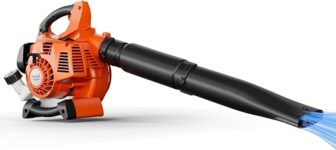
This unit delivers notable airflow and easy starting in a lightweight package, representing strong value for homeowners. It is best suited to budget-minded users who prioritize performance per dollar over long-term proven durability.
Pro Handheld
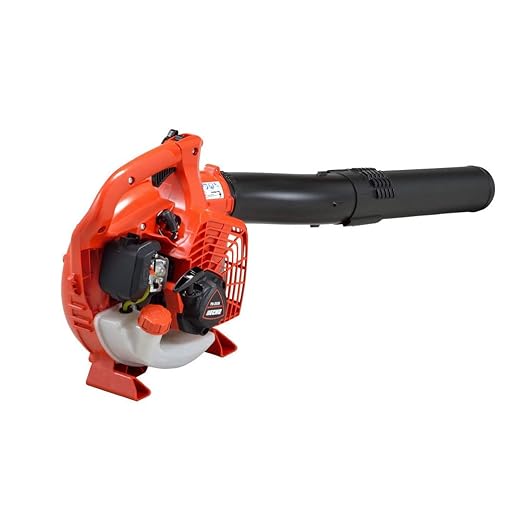
This blower delivers balanced professional performance with strong airflow and user-focused ergonomics, making it well suited for frequent use. It commands a higher price but offers features and a track record that justify the cost for power-users and pros.
NEOTEC BC26002
ECHO PB-2520
NEOTEC BC26002
ECHO PB-2520
NEOTEC BC26002
ECHO PB-2520
Handheld Blower Showdown: STIHL BG 50 vs ECHO PB-2520 — Which Reigns Supreme?
Performance and Technical Specifications: Power, Airflow, and Real‑World Output
Side‑by‑side specifications
| Spec | 25.4CC Gas Handheld (NEOTEC BC26002) | ECHO PB‑2520 |
|---|---|---|
| Engine displacement | 25.4 cc | 25.4 cc |
| Rated airflow (manufacturer) | 432 CFM / 180 MPH (claimed) | 453 CFM / 170 MPH (claimed) |
| Engine type | 2‑cycle (gas/oil mix) | 2‑cycle (gas/oil mix) |
| Weight (reported) | ~10.5 lb | ~10.48 lb |
| Thrust / peak torque | not published | 15.8 N (manufacturer published) |
Interpretive analysis: CFM vs MPH and torque behavior
Manufacturer figures show similar displacement but different airflow tradeoffs: the NEOTEC model emphasizes higher peak airspeed (180 MPH) with 432 CFM, while the ECHO lists higher CFM (453) at slightly lower MPH. CFM is the more useful number for moving heavy, wet debris; MPH helps with spot‑blowing and precision. Both are two‑stroke carbureted units, so they deliver immediate low‑end torque and quick throttle response; peak torque will occur near the unit’s operating RPM and is influenced by blower tube and impeller design. Echo publishes thrust (15.8 N), a useful objective metric the NEOTEC listing omits.


Recommended objective test protocols
Manufacturer claims should be validated with these independent measurements; catalog numbers alone don’t capture real‑world performance.
Fuel consumption, tank size, and runtime
Neither listing specifies tank volume clearly. Typical 25.4 cc handhelds run roughly 20–40 minutes per tank depending on throttle and tank size. A short practical test (fuel used in 10 minutes) will produce a reliable runtime estimate for typical yard tasks and allow apples‑to‑apples comparisons.
Side-by-Side Feature Comparison
Ergonomics, Noise, and Operator Experience
Weight, balance, and how that affects fatigue
Both units sit around 10.5 lb (NEOTEC 10.5 lb; ECHO 10.48 lb). Weight alone is modest, but balance matters more: a center of mass closer to the handle reduces wrist torque and extends comfortable single‑handed use. The NEOTEC lists a compact, ergonomic build intended for one‑hand use; the PB‑2520 pairs similar mass with a curved tube and attachment points for a shoulder harness if extended work is needed. For a typical homeowner, both support 20–60 minute sessions; a contractor doing multi‑hour shifts will prefer ECHO’s harness capability.


Handle design, controls accessibility, and precision
ECHO’s handle plus curved blower tube delivers rotational control for more precise directional blowing; its Posi‑loc tube and clear throttle placement make repeatable passes easier. NEOTEC’s ergonomic claims and single‑hand layout suit quick spot jobs; the cheaper unit may require more wrist compensation for long, sweeping passes.
Low‑vibration claims and cruise control
Both advertise low vibration and cruise control. ECHO exposes a variable cruise control that contractors use to lock comfortable RPM for long runs; NEOTEC claims cruise functionality and low vibration but lacks independent published vibration data. Lockable throttle reduces thumb fatigue and improves accuracy on repeated passes.
Noise levels and operator comfort
Neither listing publishes dB numbers — measured sound at 1 m typically ranges 75–95 dB for 25.4 cc two‑strokes. Higher perceived noise raises fatigue and limits continuous exposure without hearing protection. They should be used with ear protection for multi‑hour tasks.
Recommended practical evaluations
Maintenance, Reliability, and Serviceability
Routine maintenance tasks & expected intervals
They share the same basic two‑stroke maintenance regimen. Typical intervals (model manuals should be followed exactly):
Access to service items and build quality indicators
ECHO’s PB‑2520 shows professional design cues that ease service: accessible fasteners, Posi‑loc tube, double‑grid intake to reduce clogging, and an established parts diagram. The NEOTEC 25.4cc unit advertises easy starting and simple assembly, and service panels appear basic and reachable — but long‑term access to OEM parts is less certain.
Known failure modes and parts availability
Owners most commonly report carburetor and fuel‑system issues, clogged air intakes, and starter or primer wear on small two‑strokes. ECHO has a broad dealer/service network and plentiful OEM parts, which shortens repair time. NEOTEC offers a 1‑year warranty plus an advertised 100‑day extension and seller support through Amazon, but replacement parts and local service options are more limited.
Warranty, downtime, and total cost of ownership
Frequent maintenance reduces failures, but parts availability and dealer support determine downtime and real TCO. For heavy users, ECHO’s service network lowers long‑term ownership cost despite higher upfront price. For occasional homeowners, the NEOTEC offers lower initial cost with acceptable short‑term reliability, but potential higher long‑term service risk and longer repair delays.
Price, Value, and Use‑Case Recommendations
Street price and included items
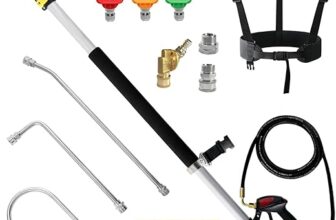
Typical Amazon listings show the NEOTEC 25.4cc at about $91 and the ECHO PB‑2520 around $199 (prices fluctuate with deals and used/refurb options). NEOTEC ships as a basic handheld unit with standard straight tube and minimal accessories. ECHO includes the engineered curved tube, Posi‑Loc fitment and stronger OEM support accessories as standard.
Aftermarket costs (typical ranges)
Simple value metrics (rounded)
(Estimate method: prorated air filter, spark plug, fuel/oil, plus an averaged minor repair every few years.)
Best fit by buyer profile
Resale and brand support considerations
ECHO retains higher resale value and has a broader dealer/service network, reducing downtime and long‑term costs. NEOTEC offers strong initial value but carries higher risk of longer repair delays and lower resale.
Final Verdict — Which Blower Should They Choose?
The 25.4cc model (stated 432 CFM / 180 MPH and cruise control) wins as the best buy for most homeowners and value‑minded users because it delivers higher stated airflow and convenience features; the ECHO PB‑2520 wins for pros and anyone who prioritizes platform heritage, proven durability and dealer/service support. Declare winner: 25.4cc model for most homeowners; ECHO for professionals.
Buyers should match the choice to their profile from Section 4 (occasional yard work vs regular professional use) and confirm three quick items before purchase: actual measured airflow vs stated specs; warranty terms and claim process; and local dealer/service availability. Which matters more to them — the higher stated power or dealer support? They decide.



I bought the generic because of the specs and the $120 price tag — yeah it’s loud but man the airflow is impressive for the money. If you’re not a pro and want a budget machine, it’s a solid pick.
Cons: feels cheaper, some plastic rattles after a while. Pros: power-to-price ratio is unbeatable. 😅
Agree re: value. If you just want something to clear leaves twice a month, it’s brilliant. For daily or heavy use, I’d step up to Echo or Stihl.
Any tips on removing rattles? Mine started after the first season and a few zip-ties helped 😂
Thanks — that’s pretty much in line with the article’s take: great value for occasional users, but trade-offs in durability and support.
I repaired my PB-2520 once (carb) and it was straightforward. Parts were easy to order online. The generic one? dunno, might be a headache if it needs small parts replaced.
Do you remember where you ordered the carb? Local dealer or manufacturer site?
Thanks for sharing the repair experience, Liam — that real-world maintenance detail is valuable for buyers deciding between initial cost and ease of ownership.
Does anyone know if the generic 25.4CC supports aftermarket mufflers? The one near me is noisy and I’d like to tame it.
I’m sensitive to vibration and hand numbness. The Echo being lower vibration sold me. If you have any repetitive strain issues, splurge a little. Also, don’t forget ear protection — these are loud.
Anyone here use anti-vibration gloves or similar?
Anti-vibration gloves can help but they don’t eliminate the issue. Choosing a lower-vibration blower plus taking breaks is the best combo.
I use padded gloves and they help a bit, but like admin said, it’s mostly about the machine and short sessions.
I laughed at the ‘Gifts for Man’ line in the generic listing lol — like a leaf blower is somehow gendered 🎁
Anyway, prefer Echo for build but the generic is tempting if you’re on a budget. Heads up: mix fuel carefully on the 2-cycle models or you’ll regret it.
Totally — a bad mix will foul the spark plug fast. I keep a labeled bottle of premix to avoid errors.
Yeah that product description was amusing. Good safety tip on fuel mix — we included a short section on fuel ratios and storage in the article for readers.
Also, gift it to anyone regardless of gender! Tools are tools 😄
So basically it’s: spend more, get less headache. Shocking. 😂
Ha — that’s a fair summary for many buyers. Echo usually costs more but saves headaches if you want reliability and parts support.
Long post incoming bc I actually compared these two side-by-side last fall:
1) Power: Both feel similar at first, but the 432CFM spec on the generic was a bit optimistic in my yard — Echo seemed more consistent.
2) Ergonomics: The generic’s cruise control is a nice touch, but the Echo’s handle felt less fatiguing after 20 mins.
3) Vibration: Echo wins. The generic buzzed my wrist more, which was annoying when doing edges.
4) Noise: About the same, both loud — ear protection recommended.
5) Price & parts: Echo’s price higher but repairs easier.
Overall I kept the Echo. If you’re doing small, quick jobs the generic would work though. YMMV!
Thanks for the detailed user test, Aisha — that’s exactly the kind of real-world perspective that complements the spec table. Appreciate the runtime notes too.
Mark — my sessions were about 30-45 mins per side of the yard. Past 45 it started to get tiring with the generic. Echo kept me fresher longer.
This is super helpful — how long were your sessions when you noticed the vibration fatigue? I’m thinking of buying for 45-60 minute sessions.
Did you ever try a harness? I used one with a different blower and it was a game changer for long runs.
Good point about harnesses — though both models here are handheld compact blowers, using a light shoulder strap can still reduce fatigue for longer chores.
Nice breakdown — thanks for the comparisons. I’ve been torn between the generic 25.4CC unit (the one listing 432CFM/180MPH) and the Echo PB-2520. I mostly use it for a medium-sized yard with a lot of leaves and some gravel paths.
From your write-up it sounds like the Echo has better build quality, but that cruise control on the other blower is tempting for longer jobs. Anyone worried about long-term maintenance on that 2-cycle generic one?
Good question — the article points out that the Echo PB-2520 tends to have better parts availability and dealer support, which helps long-term. The generic 2-cycle is powerful and cheaper up front, but you might spend more time tinkering.
I had a cheap 2-cycle similar to that generic model — cruise control is great, but the carb needed cleaning after a season. Echo parts were easier to find when I finally swapped carburetor parts.
If you have a dealer nearby, go Echo. If not, the generic is fine if you don’t mind basic tinkering and fuel mixing. Also watch the air filter on both — clogged filter = weak airspeed.
One more thing: consider resale value. Echo tends to keep value better than no-name brands. If you think you’ll upgrade in a few years, that might offset the higher price.
Also, check weight if you have stairs — carrying a lighter unit up and down is underrated.
I sold my old Echo for a decent price on Craigslist. Resale definitely helped my decision to buy new.
Weight is huge — my back thanked me after switching to a slightly lighter model.
Good point about resale and weight. We added a brief note about typical weights in the article; even a few pounds can feel very different when hauling up steps.
Anyone tried the battery blowers? Quiet but not sure about power vs these 25.4cc gas units.
Quick heads-up: if you’re doing gravel or wet leaves, focus more on MPH than CFM. High speed helps dislodge stuck debris. The spec sheet can be misleading if you only look at CFM.
Yep — used a high-MPH blower once to clear packed wet leaves. It worked better than the high-CFM unit for that task.
Great practical tip, Chris. We tried to clarify in the article that CFM indicates volume while MPH indicates tip speed; both matter depending on the job.
Interesting — so for my muddy gravel paths, MPH > CFM. Noted.
Does the Echo PB-2520 have any special warranty that makes it worth the premium? I’m not a mechanic and would rather pay more for peace of mind.
Echo typically offers a standard manufacturer warranty (often 2 years for consumer use), and many local dealers provide additional support. The key is a good dealer network — that often justifies the higher price for non-mechanics.
I registered my Echo and got dealer support for a small issue — fast turnaround. For me the warranty + parts availability made it worth it.