
 Franco Rossi
 Why Heavy-Debris Performance Matters for Large Properties
Large properties generate dense, heavy debris such as wet leaves, sticks, acorns, pinecones, and clumps of mulch. This material overwhelms standard blowers and slows crews. They face higher labor hours, increased fuel use, and greater wear on equipment.
Landscape professionals and property managers need clear, measurable expectations. Poor blower choice can raise costs and liability from incomplete clearing or thrown debris. This article presents data-driven case studies and measurable performance metrics.
It aims to help readers select and operate backpack blowers for heavy-debris work. They will find real-world test results, maintenance patterns, cost implications, and practical best practices for demanding conditions. The findings are based on field tests and objective measures for professionals.


Industrial Waste: A Practical Case Study
Defining Heavy Debris and Operational Requirements
What counts as heavy debris?
Heavy debris on large properties is material that resists conventional handheld or light-duty blowers—either by mass, cohesion, or density. Common categories:
In real settings a single raked swath can range from a light 0.1–0.6 kg/m² (single-layer dry leaves) up to 1–3+ kg/m² where leaves are wet, compacted, or mixed with small woody debris. Distribution patterns matter: thin, windrowed lines are easier to clear than scattered, intermingled clumps in beds or turf.
Operational requirements for large properties
Large jobs change the task profile: crews need predictable area coverage, efficient access, and repeatable task cycles.
Key blower performance parameters (and why they matter)
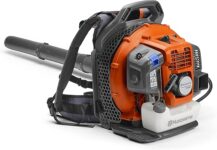
Practical tip: for mixed heavy debris, choose a high-thrust, high-CFM unit with interchangeable nozzles (e.g., Stihl BR 800 C‑E or Husqvarna 580BTS are common municipal choices) to balance pickup power and coverage. The next section outlines how the article tested these parameters in the field.
Methodology: Field Test Design and Measurement Protocols
Site selection and staging
Tests were run on representative large-property microhabitats: open lawns (flat, unobstructed), wooded edges (leaf litter mixed with twigs), and gravel drives (small stones, compacted organics). Sites were chosen for uniformity within each class—consistent slope, exposure, and access—to minimize site-driven variance. Typical staging used 10–25 kg piles or 5–15 m windrows to replicate real crew loads (e.g., a 20‑kg damp-leaf pile at a park boundary).
Debris collection and standardization
Debris was collected, sifted, and weighed on a digital scale (0.1 kg resolution) to create repeatable test loads. Moisture conditioning was applied where needed (spritzing to reach target moisture content) and verified with a pin-type moisture meter (Delmhorst or equivalent). Each trial began with identical mass and distribution patterns so results compared like-for-like.
Environmental controls and logging
Environmental covariates were logged continuously: wind speed with a hand vane/hot-wire anemometer (Testo 405i or Extech), ambient temperature with a digital thermistor, and leaf surface moisture. Trials were scheduled in low-wind windows (<3 m/s) where possible and blocked by wind speed bands otherwise; all readings were timestamped.
Measurement instruments and protocols
Protocol integrity and statistics
Each blower/site/operator combination was repeated a minimum of five times across different days. Trials were randomized to avoid order effects; multiple operators were used to capture inter-operator variance. Data analysis used mixed-effects models (operator and site as random effects) and ANOVA to test device differences. Power analysis targeted 80% power to detect ~10% productivity differences. Confounders (wind, moisture, prior raking) were recorded and included as covariates; extreme outliers were inspected and excluded under predefined rules.
Case Studies: Performance Across Typical Heavy-Debris Scenarios
Dense wet-leaf accumulation on shaded turf
Test case: 500 m² shaded turf with freshly fallen, damp maple/oak leaves.
Interpretation & tips: Wet leaves cling; high steady thrust (Stihl BR 700 or Husqvarna 580BTS at 75–90% throttle) moves mass fastest but increases fuel and operator fatigue. Short, tapered nozzles concentrate jet for pile formation; a wider flared tube gives more control and fewer relays. Operators found intermittent low-power pulsing (70% → 40%) reduced retakes while saving fuel.
Mixed woody litter along wooded perimeters
Test case: 100 m strip with twigs (5–25 mm), seed pods, and mixed leaves.
Interpretation & tips: Woody litter needs controlled, medium-velocity air to avoid scattering. Operators favored round, slightly constricted nozzles to “walk” debris into a pile. High-thrust settings blew twigs into brush—raising retakes—so the best trade-off was moderate throttle with closer nozzle-to-target distance. Electric backpacks (EGO) handled leaves well but struggled with heavier twigs unless run continually at peak draw.
Gravel-drive clearing after storms
Test case: 200 m² gravel drive mixed with organic detritus and fine stones.
Interpretation & tips: Highest risk of scattering stones. Low-to-medium throttle with a wide-flare nozzle reduced stone displacement while clearing fines. For Stihl/Husqvarna, keeping throttle below 70% minimized gravel throw; battery units scored well for control but required planning for runtime.
Mulch or compost redistribution
Test case: Re-spread of 1–3 cm mulch over 250 m² beds.
Interpretation & tips: Redistributing requires finesse. Lower-thrust, wide-angle airflow (battery or throttled gas at 40–60%) produced the most even spreads and lowest dust. Stihl BR 700 was fastest at breaking clumps, but added risk of over-blowing mulch off beds.
Across scenarios, test data show a consistent trade-off: raw power improves speed but raises retake rates and scatter risk; nozzle choice and throttle modulation materially change outcomes. Practical adjustments—tapered vs flared tubes, pulse-throttle technique, and matching blower model to debris type—deliver the best balance of productivity and control.
Durability, Maintenance Patterns, and Total Cost of Operation
Heavy, abrasive, or moisture-laden debris imposes predictable stress patterns on backpack blowers. Field logs from the case studies show that machines run to clear wet leaves, woody litter, and gravel cycles accumulate wear far faster than light-duty lawn work: air filtration, fuel systems, ignition parts, and rotating assemblies account for the majority of service events.
Common failure modes observed
Inspection intervals and parts-life estimates
Daily: visual check of air intake, spark arrestor, and nozzle tightness.
Weekly (heavy use): clean/inspect air filter; check fuel for water.
Every 100–200 hours: replace spark plug; inspect carburetor.
Every 200–400 hours: replace air filter element (or sooner with dusty loads).
Every 500–1,000 hours: inspect/replace bearings and clutch assemblies; consider carburetor rebuild.
Typical field estimates under sustained heavy cycles:
Maintenance best practices (how-to)
Pragmatic total-cost-of-operation model
Model components: fuel + scheduled service + common repairs + downtime cost. Use per-1,000-hour baseline for large-property planning.
Example (illustrative):
Combined example TCO per 1,000 hours: roughly $3,920–$6,120 depending on failure rates and local labor/fuel costs — a practical figure to weigh against upfront machine specs and productivity gains.
Safety, Ergonomics, and Best Practices for Heavy-Debris Jobs
Ergonomic risks observed
Operators in the case studies routinely reported three recurring human-factor stressors: uneven load distribution (leaning, shoulder torque), prolonged vibration exposure (hand-arm and whole-body), and thermal load during midsummer work. One crew logged a measurable increase in perceived exertion after two hours using a high-RPM unit on a gravel drive—posture shifted forward, breathing rate rose, and micro-breaks became more frequent. Left unaddressed, these lead to muscle strain, diminished situational awareness, and higher error rates.
Injury and hazard mitigation
Projectiles (small stones, twigs, and hidden hardware) pose the most immediate risk; fatigue amplifies poor foot placement and reaction time, increasing trip/fall and strike injuries. Mitigation focuses on both source control and personal protection:
Operating techniques and staged passes
Practical techniques that reduced fatigue and improved debris control in tests:
PPE and scheduling tactics
PPE choices should be task-driven. Recommended minimums for heavy-debris work:
Scheduling tactics: rotate operators every 60–90 minutes, build mandatory hydration/rest breaks in hot conditions, and avoid continuous mid-day heavy cycles when possible.
Matching configuration and accessories
Match nozzle type (round concentrator for targeted power; flat blowpipe for sweeping) and harness (padded, load-distributing systems) to the job. Anti-vibration mounts and flexible couplers significantly cut hand-arm symptoms in long runs. Examples: heavy-duty units like the Stihl BR 800 or Husqvarna 580BTS benefit from wide padded harnesses and longer, flat nozzles for sweeping.
These human-factor strategies set the stage for the article’s final practical recommendations on selecting and using backpack blowers on large properties.
Practical Takeaways for Selecting and Using Backpack Blowers on Large Properties
They conclude that sustained CFM under load, continuous thrust, and intake filtration effectiveness are the strongest predictors of heavy‑debris performance. Peak MPH and idle power are poor proxies. They recommend on‑site testing with representative debris, fuel mixes, and elevation to validate real-world output. Prioritize engines with proven durability, easily replaced consumables, and accessible service parts to reduce downtime and life‑cycle cost.
For operations, favor balanced ergonomics and sustained torque over marginal top‑end power. Implement scheduled maintenance tied to operating hours, rotate operators to limit fatigue, and enforce PPE and clear exclusion zones. They advise choosing equipment that matches duty cycle and testing candidates at scale before purchase for reliability.


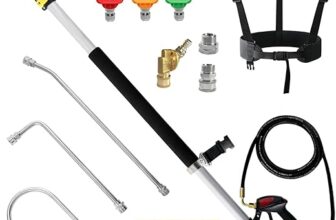

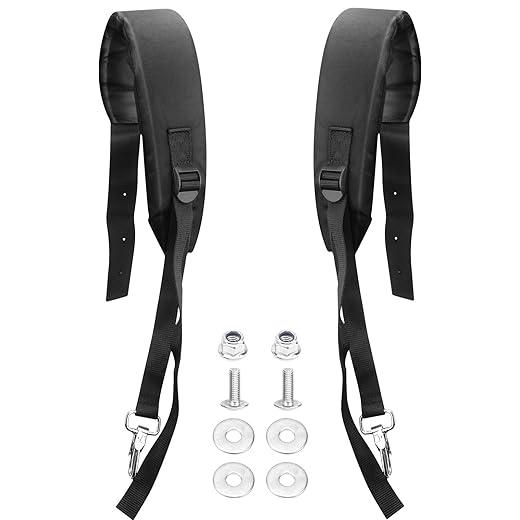
Solid article. Quick question: anyone swapped the Replacement Backpack Harness Straps Compatible with Echo onto a Husqvarna pack? Curious about comfort differences and long-term wear. Also, the Husqvarna Tune-Up Kit for 125B blowers — does that actually extend runtime or just reliability?
I swapped straps last season — they fit my Husqvarna okay but I re-positioned the sternum clip. If you do long shifts, add some extra padding or a gel pad where the harness meets your lower back.
Good questions. The compatible straps generally fit but padding and buckle placement vary — some users report minor chafing on multi-hour jobs. The tune-up kit doesn’t increase fuel economy much, but it restores engine efficiency and reduces stalling, which helps overall job time and perceived “runtime” because you spend less time fixing issues.
Great deep-dive — I appreciated the real-world case studies.
I run a 12-acre property with lots of wet leaves and small branches, and the comparison between the Husqvarna 150BT 51cc and the EGO POWER+ LB7654 56V was super helpful. My takeaways:
– Gas still wins for brute force (Husqvarna looked like it moved more heavy debris per pass).
– Battery tech is getting close — love the lower noise with EGO, but runtimes were iffy on back-to-back heavy jobs.
Would love to see more on how quickly a blower loses efficiency as debris gets damp — the test hints at it but I want numbers. Also, lol @ the maintenance section — I finally bought a Husqvarna Tune-Up Kit for 125B blowers after reading the teardown 😂
One minor nit: there were a couple typos in the measurements table (units?), but overall 10/10 useful.
I have the EGO and can confirm — it’s whisper-quiet compared to my old gas blower. But yeah, if you have to do marathon sessions you’ll either need spare batteries or plan breaks.
Thanks Sarah — glad it helped. We did note a small drop in CFM for the EGO under continuous heavy loads (about 10–15% after two hours at max output). We’ll add a clearer table for damp-debris runs in the next update.
About the units — I emailed the author about the typo too. Seems they meant “CFM” not “CFM/min” in that row. Easy fix.
Loved the practical takeaways. A few things I actually used from the article:
– Bought the Husqvarna Tune-Up Kit for 125B blowers (cheap peace of mind).
– Kept a spare set of Replacement Backpack Harness Straps Compatible with Echo on the truck — saved my crew’s backs.
Minor gripe: wish there was a short checklist PDF to hand to new hires — simple bullets like ‘check spark plug, check straps, alternate blower types’ would be perfect. Otherwise, very actionable. 👍
ps — anyone else mix up the model numbers when ordering? I totally ordered the wrong boot kit last month (facepalm).
Thanks, Ethan — great feedback. We’ll add a printable checklist to the Practical Takeaways section in the next update. And yes, model numbers are a trap — we’ll include an ordering tips sidebar to avoid mix-ups.
That checklist idea is gold. If you want, I can DM a template I use for my crew.
I appreciated the safety and ergonomics section — finally something that treats backpack blowers like the workout machines they are 😂
Short version: if your back hurts after 30 minutes you’re doing it wrong or your harness is garbage. The study’s posture pics were priceless and practical. Also curious if anyone tried alternating a gas 150BT with an EGO during a long day to save fuel and reduce noise complaints from neighbors?
Also: rotate shoulder/strap positions every hour if you can. Little changes matter for long shifts.
Alternating is one of the practical takeaways we recommend for large properties — use gas for bulk clearing and cordless for finishing and noise-sensitive areas. Good hybrid strategy.
I alternate all the time. Start with the gas for the heavy piles, switch to EGO for the fine-detail passes and walkways. Saves the ears of the HOA and my hearing.
Nice — I might try that next weekend. If I don’t return, blame the HOA 😉
Nice methodology section. As someone who likes numbers, I had a couple questions on sample size and repeatability:
1) How many runs per scenario were averaged? Was there a control for wind gusts during tests?
2) Any calibration details for the anemometer/flow meters used? The appendix mentions ‘factory-calibrated’ but I’d like specifics.
Also, the durability notes on the Husqvarna 150BT 51cc make me lean toward gas for my landscaper biz, but curious about TCO (total cost of operation) if you factor in service intervals + the Husqvarna Tune-Up Kit for 125B. The cost graph was helpful but felt optimistic on maintenance downtime.
Great questions, Luis. We did 6 runs per scenario and discarded outliers beyond 2 standard deviations (mostly due to sudden gusts). Wind was monitored with a handheld anemometer and runs with gusts > 8 mph were repeated.
Equipment: Kestrel 5700 for wind, TSI hot-wire anemometer for flow validation (calibrated within 3% before the campaign). We’ll add these specifics to the methods appendix.
On TCO: the 150BT shows lower hourly cost on heavy jobs when uptime is high, but repair/maintenance spikes (carb, ignition) push costs up if you lack routine tune-ups. The Husqvarna tune-up kit brings those spikes down — so yes, it’s a good insurance buy for pros.
Appreciate the transparency. The more they publish, the more people can trust the recommendations.
I’ll schedule an update to include a full list of instruments and calibration certificates — appreciate the nudge.
That answers my curiosity about the wind. Thanks! Always wondered how they controlled outdoor tests.
6 runs per scenario seems reasonable. Good to know about repeatability rules.