
 Franco Rossi
 They’ll discover whether AR Blue Clean’s smarter efficiency or Ryobi’s brute-force power is the real time- and money-saver.
Meet the contenders: they pit AR Blue Clean’s 1900 PSI, portable car washer against Ryobi’s 2300 PSI surface-cleaner, highlighting differences in rated power, typical uses, and what buyers should expect before deeper testing and final recommendations plus quick buying tips.
Versatile Cleaner

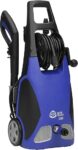
It delivers solid, above‑average cleaning for typical household tasks and includes a thoughtful set of bayonet accessories that speed setup. The trolley chassis and foam cannon make it versatile for cars, decks, and siding, though storage hardware and mostly plastic construction temper expectations for longevity. Overall it’s a capable, well‑priced electric option for medium‑duty users.
Large Surfaces

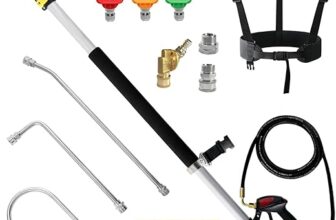
It’s an efficient, low‑cost way to cut the time and effort of cleaning driveways, patios, and sidewalks when paired with a compatible pressure washer. The wheeled design reduces operator fatigue and produces a streak‑free finish over large flat areas, though it won’t replace a wand for tight corners or heavily textured surfaces. As an accessory it offers strong value for the price.
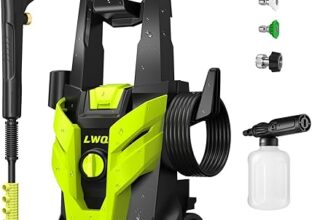
AR383 Electric Washer
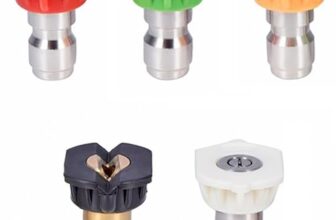
Ryobi Surface Cleaner
AR383 Electric Washer
Ryobi Surface Cleaner
AR383 Electric Washer
Ryobi Surface Cleaner
Top 5 Electric Pressure Washers: The Best Picks and Quick Reviews
Specs and performance: raw numbers and what they mean
This section lays out the hard specs side‑by‑side and interprets them for practical use. It summarizes AR Blue Clean AR383’s 1900 PSI, 1.51 GPM, 14‑amp motor, bayonet accessory connection, onboard storage and portability focus, and contrasts that with the RYOBI 2300 PSI surface cleaner accessory.
Side‑by‑side headline specs


What PSI and GPM mean in practice
PSI measures spray force; higher PSI breaks loose stubborn grime. GPM measures how much water flows — it determines how quickly loosened dirt is rinsed away. Cleaning speed and effectiveness come from both: a higher PSI with low GPM can blast but leave more rinsing work; higher GPM with moderate PSI rinses faster.
Accessory and nozzle impact
A wand with variable nozzles (AR383’s bayonet lances and turbo nozzle) lets the user target tight spots and cars. A dedicated surface cleaner concentrates rotating jets under a skirt to deliver streak‑free, uniform cleaning over flat surfaces — it multiplies usable area even if the parent washer’s PSI/GPM are modest.
Electrical, compatibility, and real‑world output
The AR383’s 14 A rating means it runs on a standard 120 V/15 A circuit but can trip weak or shared circuits; use a heavy‑duty outdoor extension if needed. Many electric washers produce near‑rated PSI on short tests; sustained output can be 5–15% lower as motors heat. Surface cleaners depend on adequate flow to spin—if the washer’s GPM is too low the spinner slows and leaves streaks, so higher rated PSI alone doesn’t guarantee faster cleaning.
Recommended operating pressures (practical)
Feature Comparison Chart
Real-world cleaning tests: cars, driveways, patios and decks
Test methodology
They run both setups from the same outdoor spigot, use the same biodegradable car/household detergent where applicable, and time single‑operator passes. Water consumption is estimated from rated GPM × active spray time. Each scenario uses identical prep (sweep/rinse) and two timed passes: an aggressive pass to dislodge grime and a rinse/pass to finish.
Delicate car washing
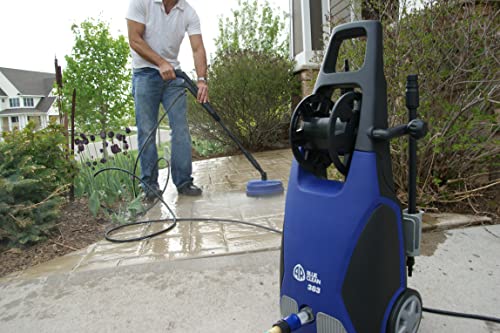
AR383: Best choice. Its 1,900 PSI and foam cannon let the tester pre‑wet, foam, dwell, then rinse without threatening paint when used 6–12″ back. Expected time: 10–20 minutes; water: ~15–30 gallons depending on rinse time.
RYOBI surface cleaner: Not recommended — awkward on curves, risk of concentrating jets near trim. Avoid using the surface cleaner on vehicles.

Cleaning a concrete driveway (embedded grime)
AR383: Gets results but is slow on large areas; operator needs overlapping passes and a turbo nozzle for stains. Estimated time for a one‑car driveway: 60–90 minutes; water: 90–140 gallons.
RYOBI 12″ surface cleaner: Excels — rotates jets for even, streak‑free cleaning and cuts time ~3–4×. Estimated time: 20–30 minutes; water: 30–45 gallons.
Patio pavers with moss and mildew
AR383: Good for edges and tight joints; soap + stiff brush plus targeted wand works well.
RYOBI: Fast on broad paver fields but struggles in joints and very uneven stones — follow up with the wand.
Wood deck (weathered dirt)
AR383: Safer for soft wood when used at lower pressure and wide fan nozzle; use detergent and gentle passes.
RYOBI: Avoid — concentrated rotating jets and casters don’t track well on boards; can etch wood and raise grain.
Surfaces/situations to avoid:
User experience: setup, portability, and everyday use
Out‑of‑box setup and connectors
Both items are plug‑and‑play, but their roles differ. The AR383 arrives as a complete washer: unpack, roll it to the spigot, snap the bayonet trigger and lance onto the gun, hook up the 20 ft hose and a garden hose, and it’s ready. Bayonet connectors make nozzle swaps and the foam cannon hookup fast. The RYOBI surface cleaner is an accessory: attach its 1/4″ quick‑connect to a wand or pressure‑washer outlet and it’s ready to roll — simple, but dependent on the parent washer and hose reach.
Portability and handling
The AR383 is designed to be carried between garage and driveway. At ~18 lb on a two‑wheel trolley with an ergonomic handle, it wheels easily over concrete and compact yards; onboard storage keeps most accessories with the unit. The RYOBI surface cleaner is only 4.4 lb and rides on three caster wheels while cleaning; it’s effortless to push during a job but isn’t intended as the transport solution — users still carry the main washer to the work area.
Controls, comfort, and daily use
The AR383’s bayonet trigger gun and vari‑spray lances offer familiar wand ergonomics and rapid nozzle changes. Both products are electric, so they run much quieter and with less vibration than gas models; the surface cleaner’s casters reduce operator fatigue for flat areas. Expect the AR383’s plastic storage areas to be cramped and occasionally tangle the hose.
Maintenance and conveniences
These tradeoffs make the AR383 the simplest single‑unit daily washer, while the RYOBI surface cleaner is the low‑fatigue specialist for large, flat areas when paired with a compatible washer.
Value, durability and ownership costs
Price and what’s included
The RYOBI surface cleaner lists at about $68 on Amazon; the AR Blue Clean AR383 price fluctuates by retailer—buyers should confirm the current Amazon listing. What each box contains matters for initial value:
Replacement parts and common failure modes
Expect normal wear items and likely repair points:
Replacement parts are generally inexpensive for both, but labor or shipping can add up if no local parts supplier is available.
Build quality and serviceability
Material choices signal longevity. The AR383 prioritizes lightweight plastics and molded fittings for portability; that keeps cost and weight down but can shorten cosmetic and accessory life. The RYOBI surface cleaner uses metal rotor components and simple 1/4″ fittings, which tend to be more robust and easier to source spares for. Proprietary bayonet fittings on the AR unit speed use but can complicate sourcing exact replacements; the RYOBI’s standard quick‑connects are universally serviceable.
Warranty and manufacturer support
Consumer electric washers and accessories commonly carry limited warranties; expect at least one year for pumps and motors from many brands. Ryobi often provides multi‑year support on tools, but terms vary. Buyers should verify current warranty length and claim procedures on the Amazon product page before purchase.
Buying scenarios
Final verdict: which should they buy?
For someone who wants a compact, versatile unit for cars, siding and gentle cleaning, the AR Blue Clean AR383 is the practical winner: it is easier to store, offers on‑board accessory organization and lower pressure options that reduce the risk of damage while still handling routine driveway and vehicle jobs. It’s the pick for homeowners who prioritize portability and multi‑surface use.
If they frequently clean large, flat exterior areas and want fast, streak‑free concrete, the RYOBI 2300 PSI surface cleaner is the clear choice — it finishes patios and driveways far more quickly. Before buying, they should check the current Amazon listing for included attachments, price and warranty. Which cleaning task will matter most this season? They should favor the AR383 when value and compact storage matter, and favor the RYOBI when speed and spotless concrete are the highest priorities today.



Noticed some comments about oil stains — has anyone tried using a degreaser with these? Does the surface cleaner spread it out or make it harder to remove?
I worry about making a mess with the Ryobi.
Generally pre-treat oil with a degreaser and agitate if needed before pressure washing. Surface cleaners can spread cleaner around a bit — for concentrated treatment a wand works better to target the spot.
I chuckled at the “1900 vs 2300” debate — numbers alone don’t make winners.
I think for most folks:
– If your yard is mostly open flat concrete/patio: Ryobi + surface cleaner = faster, cleaner finish.
– If you have a car, steps, siding or want something storable: AR Blue Clean.
Also, the Ryobi’s green color is oddly satisfying lol 🎨
Has anyone used extension hoses with either? Do they lose a lot of pressure?
Used a 50 ft extension with AR once — slight drop but not noticeable for cars. For heavy-duty cleaning I wouldn’t go crazy with extensions.
If you’re worried about pressure loss, look at GPM and hose inner diameter — larger ID maintains flow better.
Nice summary! Extension hoses can reduce pressure slightly depending on diameter and length. Using a wider hose with minimal length helps maintain flow.
Thanks, @Ethan Morales. Good to know 50 ft is okay for casual use.
I own the Ryobi RY31SC12 and man, that 12-inch surface cleaner changed how fast I clean. Driveway done in like 10 minutes compared to 40 with a wand.
Couple of things: the caster wheels are fine on smooth concrete but can wobble on rough surfaces. Also I had to pre-treat oil stains, it doesn’t remove heavy oil in one pass.
Worth the buy if you prioritize speed.
Right — and cleaning attaches in my garage was a breeze. But still keep a wand for the edges.
Ditto. If it’s mostly flat surfaces, that time saving alone pays off.
Excellent real-world time comparison — those are valuable for readers deciding if it’s worth the cost.
For someone who only washes their car and occasionally the patio, which one would you pick? I’m torn.
Car care is the priority but I don’t want a bulky unit.
For car-focused use, AR Blue Clean AR383 is likely the better fit: more compact, accessories for car washing, and easier storage.
Agree with admin. AR is good for cars. Ryobi is overkill if you don’t have big flats to clean.
I think the price-to-value is interesting: sometimes Ryobi kits (when on sale) are a bargain for the surface cleaner alone. But AR Blue Clean often includes more versatile accessories.
Couple of extra thoughts:
– Check included nozzle types
– Check whether extension wands are compatible
– Verify plug/cord length — extension cords can be a hassle
Buying tip: watch for seasonal sales (spring) — you’ll often get the best deal.
Would love that spec summary — makes decision faster.
Yep — I once bought a unit where the actual working PSI felt lower than advertised. Lesson learned.
If anyone wants a quick spec-compare table from the article summarized, I can add a comment with bullet points.
Also check PSI and GPM specs printed on the box vs manual — sometimes marketing rounds numbers.
Good checklist — nozzle variety and cord length are practical things people overlook until they’re mid-cleaning and annoyed.
Good breakdown — thanks for this comparison!
I’m leaning toward the Ryobi surface cleaner because of the 2300 PSI and the casters — seems perfect for big patios and driveways.
But I’m worried about storage/portability since the AR Blue Clean has on-board storage and is lighter. Anyone used both and can comment on maneuverability?
Also, the AR383’s 1.51 GPM seems okay for cars but might be slower on heavy grime.
Appreciate any real-world user tips 🙂
Used the Ryobi for a year on my driveway — it’s a beast for flat areas. But for siding and cars I had to use a wand attachment (not as tidy).
Thanks @Jordan Miles — that helps. Might get the Ryobi and borrow a smaller unit for cars from a friend occasionally.
If you mostly clean large flat surfaces the Ryobi surface cleaner is a big time-saver — the casters and the 12-inch cleaning path cut down time a lot. For cars and tighter spots, the AR Blue Clean wins for portability and attachments.
Anyone worried about the long-term durability? Electric units can be hit or miss — seals, pumps, and cheap fittings are the usual weak spots.
I don’t want to buy something that dies after 2 seasons.
I had an AR model (older gen) last 4 years with moderate use. Replaced a hose connector once. So far so good.
Durability varies by usage patterns. Light homeowner use (once a month) usually gives many years. Heavy use or commercial workloads will stress pumps. Look for metal fittings where possible and check consumer reviews for pump failures.
I’ve got the AR383 and love how compact it is. A few notes:
– The bayonet connect accessories are super easy for quick swaps.
– 1900 PSI felt enough for my car and the patio.
– Sometimes it struggles a bit with really stained concrete (had to do multiple passes).
Overall it’s cheaper and more versatile than getting a dedicated surface cleaner, but if you have tons of flat area the Ryobi probably saves time.
Also, the cord and hose storage is clutch — no tangles in the garage 😅
Sofia — how’s the motor noise? I live in an apartment complex and want something relatively quiet.
@Ben Carter it’s electric so quieter than gas units, but still audible. Definitely acceptable for neighborhood use — not annoyingly loud though.
Reminder: always check local noise ordinances if you plan to use early/late.
This is exactly the kind of insight I wanted — thanks!
Great real-world details, Sofia. The AR’s storage is often underrated for homeowners with limited space.
Short and sweet: if you want a surface cleaner — Ryobi. If you want versatility for car washing and storing accessories — AR Blue Clean.
No other middle ground IMO.
Love the comparison but a quick PSA: surface cleaners (like the Ryobi) are a different workflow than a wand. They feel magical on flat surfaces but are awful near steps, gutters, or textured surfaces.
If you live somewhere with lots of crevices, you might want both or the AR unit for versatility.
Also, warranty/service — check who’s easier to contact in your area. I had to send a unit in once and the turnaround time made me rethink brand choices 😬
If any readers share their local experiences (service centers, replacement parts), drop them here — community tips help others decide.
I found Ryobi customer service pretty responsive via chat last year — saved me a trip.
Good point about workflow and service. We try to note warranty differences when available — Ryobi usually has broader retail support, AR Blue Clean is reliable but sometimes sold through different channels.
Thanks @Marcus Lee — that’s helpful. My local big box had Ryobi parts on the shelf which was a lifesaver.
Totally agree about the surface cleaner: looks like you should’ve been doing pressure washing your whole life after the first pass 😂 But yeah, edges suck.
FYI AR Blue Clean parts are generally available online; Ryobi parts are usually in-store too. Depends where you shop.
Curious about the GPM difference — AR is 1.51 GPM. Does anyone know Ryobi’s GPM for the RY31SC12? That impacts cleaning power more than PSI sometimes.
Good question. Ryobi’s model specs often list around 1.2–1.5 GPM depending on the exact motor. Higher GPM improves rinse and dirt removal; PSI alone doesn’t tell the whole story.
I prefer renting a higher-end unit for big jobs and owning the AR for small regular use. Saves cash and gives flexibility.
Not much else to add, just my two cents.