
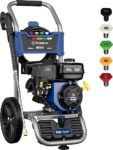
Which Cold Water Pressure Washer Delivers Best Driveway & Deck Results?
 Ella Clark
 Why Choosing the Right Cold Water Pressure Washer Matters
They face a practical question: which cold water pressure washer delivers the best results on driveways and decks? The choice is a balance between cleaning power, surface sensitivity to avoid damage, throughput (area cleaned per hour), machine durability, and ongoing operating cost. Many buyers pick by brand buzz or price and miss the performance trade-offs that determine real-world results.
This article takes a measured approach. It emphasizes measurable performance metrics, surface-specific requirements, and machine features that affect outcomes. It explains operational techniques and test methods so readers evaluate washers objectively. The goal is a clear, data-driven buying path that matches a washer to the job, not marketing, and long-term value considerations.



Hot Water vs Cold Water Pressure Washers: Which Cleans Better
How Cold Water Pressure Washers Work and What Performance Metrics Matter
Core principles: PSI, GPM, and cleaning output
PSI (pounds per square inch) measures the force the machine applies at the nozzle; higher PSI slices and dislodges compacted grime. GPM (gallons per minute) measures water flow; higher GPM rinses loosened material faster and increases effective cleaning rate. A practical shorthand is Cleaning Units (CU) = PSI × GPM — not perfect, but a useful comparative metric across models.
A real-world touchpoint: a 3,000 PSI × 2.5 GPM machine (7,500 CU) will attack oil and concrete deposits far faster than a 1,800 PSI × 1.5 GPM unit (2,700 CU), but the latter is gentler on wood decking.
Pump types and drivetrain basics
Axial pumps are lighter and lower-cost; they suit seasonal homeowners who use a washer a few times per year. Triplex (wobble or triplex plunger) pumps deliver steadier pressure, longer life, and better thermal tolerance — preferred by contractors and heavy users. Motor/drivetrain choices follow similar tradeoffs: gas engines give mobility and peak power; electric motors (especially induction) offer quieter, lower-maintenance operation for residential use.
Nozzles and accessories that change performance
Nozzle spray angles concentrate or spread force: 0° (cutting, risky), 15° (concentrated), 25° (general cleaning), 40° (gentle). Turbo/rotary nozzles increase impact per unit time for hard surfaces; surface cleaners create uniform coverage on flat areas and reduce streaking. Downstream injectors meter detergents for decks where chemical softening reduces needed PSI.
They leave readers able to read spec sheets and imagine how PSI, GPM, pump type, and nozzle choices will translate to driveway scouring or deck-safe cleaning in the next section on surface requirements.
Surface Requirements: What Driveways and Decks Need from a Washer
Driveways: power and throughput for hard, stained surfaces
Driveways (concrete or asphalt) demand force and flow. Embedded oil, tire marks, and mineral staining require concentrated impact to break bonds and steady flow to flush residue. Practical target ranges are 2,000–3,500 PSI combined with 2.0–4.0 GPM; that delivers the cleaning units needed to cut into grease and deep grime without excessive passes. Turbo/rotary heads or a high-pressure 15°–25° fan nozzle are the fastest tools for these jobs; surface cleaners (12–18″) produce uniform results on flat slabs and dramatically cut streaking and operator fatigue. Pre-treat oil with a good alkaline degreaser, let dwell, agitate with a stiff broom, then rinse with high-impact passes.
Decks: protect the substrate while removing biological and dirt buildup
Decks require a gentler approach to avoid wood fiber tearing, etching, or finish removal. Softwoods (pine, cedar) are safest at 500–800 PSI; hardwoods and many composites tolerate up to ~1,200–1,500 PSI if used with wide 25°–40° fan nozzles and steady motion. For aged or painted decking, lower pressure plus a purpose-made deck cleaner (oxygen bleach, wood brightener) usually yields better, longer-lasting results than brute force. For delicate or historic decks, a soft-wash kit that applies chemical cleaners at low pressure is often the best choice.
Substrate-specific best practices (quick reference)
These objective criteria help match a washer’s capability to what the surface can tolerate and the expected soil load. The next section examines how machine types and design features translate these needs into real-world performance.
Machine Types and Design Features That Affect Driveway & Deck Results
Machines differ as much in design as in advertised PSI. Understanding those choices helps buyers match a washer to the job instead of the sticker.
Electric vs. Gas: usable power, runtime, and user tradeoffs
Electric models excel at lower-noise, low-maintenance work and are ideal for lighter deck jobs or short driveway touch-ups. Gas units deliver higher usable PSI/GPM for stubborn concrete stains and sustained surface-cleaner work, but carry higher noise, emissions, and routine engine service needs. For projects that span hours or large areas, favor a gas-powered machine with a robust engine and pump for consistent throughput.
Pump construction: why triplex matters
Triplex pumps (three ceramic pistons) provide steadier pressure, cooler operation, and longer service life than axial/plunger designs. For cleaning long runs of driveway or an entire deck, a triplex pump sustains pressure under load and accepts pump oil changes—both key to consistent results and lower lifetime cost. Tip: look for “replaceable pump oil” and ceramic pistons in spec sheets.
Detergent, thermal, and safety features
Onboard tanks are convenient for routine detergent use; downstream injectors keep chemicals isolated from the pump and are safer for delicate wood. An unloader valve prevents pressure spikes; thermal relief protects the pump when the lance is closed. Verify both features for repeated stop-and-start work.
Hose, wand, and surface-cleaner integration
Long, high-quality hoses (50+ ft, reinforced braid) reduce repositioning and make surface cleaners practical. Ergonomic lances, fingertip pressure control, and quick-connect mounts for 12–18″ surface cleaners cut operator fatigue and improve uniformity.
Durability indicators and serviceability
Prioritize metal fittings, brass manifolds, ceramic pistons, and easy parts access. Brands with local service networks and clear warranty/parts policies reduce downtime and total cost of ownership.
Next, the article will cover operational techniques and accessories that turn these machine capabilities into consistent, professional results.
Operational Techniques and Accessories That Improve End Results
Optimal spray patterns, speed, and overlap
Consistent motion matters more than maximum PSI. For surface cleaners, advance steadily (roughly 1–2 ft/s) with 10–20% overlap between passes to avoid striping while keeping throughput high. With a handheld wand use slow, even sweeps (2–6 in/s) and 30–50% overlap; feather the edges to blend passes. Always test a small area and mark travelled lines—many pros use chalk to keep spacing exact.
Surface cleaner vs. handheld wand; nozzle choices
Surface cleaners (e.g., Kärcher T-Racer, Mi-T-M 18–20″) deliver uniform results fast on flat concrete. Handheld wands are essential for edges, stairs, and decks. Use rotating/turbo nozzles (AR/Mosmatic) only for stubborn stains: they concentrate kinetic energy and cut faster but can etch concrete or raise wood grain. When using a turbo, increase nozzle distance and reduce pressure for wood; on concrete, keep moving to avoid gouging.
Detergents, dilution, and dwell time
Match chemistry to the stain:
Typical dilutions run from 1:10 (heavy) to 1:50 (light). Allow 5–10 minutes’ dwell but don’t let solutions dry; re-wet if necessary. Always rinse thoroughly and neutralize acidic cleaners to prevent residue or wood damage.
Preventing streaks and protecting landscaping
Cross-hatch or overlap passes and keep speed consistent to minimize streaking. Pre-soak adjacent plants and cover sensitive beds with plastic; divert runoff and use biodegradable detergents. For decks, rinse with lower pressure and finish along the grain to prevent fiber lifting.
Pre-soak and mechanical agitation
For deep grime, pre-spray, agitate with a stiff bristle brush or a rotary brush attachment, then follow with a surface cleaner or wand. Contractors routinely report that a 10–15 minute pre-soak plus agitation reduces rework by half.
Next, the article will explain how to test and compare cold water washers objectively for these real-world performance factors.
How to Test and Compare Cold Water Pressure Washers for Driveway and Deck Performance
Test setup: standardized conditions
They should create repeatable test patches: a 10 ft x 10 ft concrete panel with oil and dirt streaks, a 4 ft x 8 ft pressure‑treated deck section with algae/mildew, and a small rust‑stained area. Use the same municipal water supply (measured static pressure), no pre‑heating (cold water), and a flowmeter to record gallons. Use the same surface cleaner or wand and nozzle type for all machines.
Step‑by‑step protocol
Metrics to record
Durability & reliability checks
Run continuous cycles (e.g., 30 minutes on / 10 minutes off for several hours), log pump outlet temperature with an infrared gun, and monitor oil levels and leaks. Perform hose/wand fatigue by flexing and kinking connectors for a set count or time. Note any loss of pressure or thermal shutdowns.
Normalizing results for fair comparison
Compute cleaning efficiency metrics such as square feet cleaned per gallon and a normalized score: (sq ft cleaned × percent removal) / gallons used. For powered units, also show sq ft per kWh or per liter of fuel to compare electric vs gas fairly across PSI/GPM differences.
Practical field build & serviceability checks
Quickly verify ease of nozzle change, access to inlet filters, visible oil sight glass/dipstick, wand coupling quality, and availability of common spare parts. These small checks strongly predict real‑world uptime.
Next, the article will translate these performance findings into total cost, safety, and maintenance considerations.
Total Cost, Safety, Maintenance, and Final Buying Criteria
Direct and operating costs — how to think about value
Total cost = purchase price + lifetime operating costs (fuel/electricity, water, detergent, replacement parts, routine service). Amortize purchase across expected lifetime hours or square feet to compare models.
Quick method to calculate cost per sq ft:
Example: a $1,000 unit expected to run 500 hours and clean 50 sq ft/hr gives purchase amortization $1,000 ÷ (500×50) = $0.04/sq ft. Add water, detergent, and fuel to get a true cost-per-sq‑ft for procurement comparisons.
Safety essentials for driveway & deck work
Maintenance practices that preserve performance
Final prioritized buying checklist
With these cost, safety, and maintenance lenses, readers can objectively rank candidates and move on to concluding recommendations.
Making an Objective Choice for Driveways and Decks
The best cold water pressure washer is the one whose PSI/GPM profile, pump durability, accessories, and detergent options match the surface requirements and expected soils. Readers should apply standardized test criteria—measured cleaning units, nozzle and distance control, and repeatable rinse cycles—to verify claims. For decks, prioritize surface-safe techniques, lower PSI with higher flow or soft-wash detergents, and splinter-safe nozzles; for driveways prioritize higher cleaning units, rotary or turbo nozzles, and chemical stain breakers.
Balance short-term performance against lifetime operating costs, parts availability, and maintenance schedules. By selecting machines against these objective metrics and testing protocols, they arrive at a defensible purchase that delivers consistent, verifiable results. Consider warranties and local service options.


Great write-up — I loved the breakdown on surface requirements.
I’ve got a rough concrete driveway and an older cedar deck, and the WPX3600 recommendation for heavy-duty grime makes total sense. The note about using the 14-inch stainless surface cleaner for driveways was especially helpful — saved me from thinking I had to do it all with a turbo nozzle.
Also, the maintenance tips (oil, spark plug, winterizing) were practical — been burned before by skipping that. 👍
One thing I’d add: mention noise levels for gas units vs electric — neighbors complain where I live.
Totally agree on the noise. I have the WPX3400 and my neighbors hear it two houses down. But power-wise it’s worth it for concrete stains.
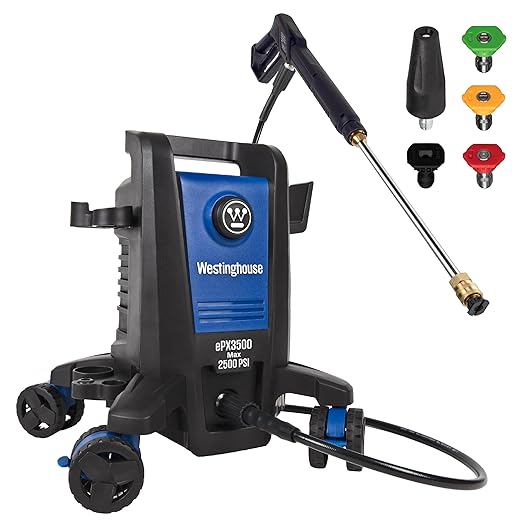
Nice article. Quick q: for light-duty cleaning (seasonal pollen, bike marks) is the Westinghouse ePX3500 actually enough, or should I go gas? I live in an apartment with limited storage and want something quieter.
Good read, but I wanted more clarity on PSI vs GPM tradeoffs. From the “How Cold Water Pressure Washers Work” section I got the theory, but in practice:
– Is 3400–3600 PSI overkill for every driveway?
– Or is higher GPM more important for rinsing large flat surfaces?
My driveway is fairly long (about 60 ft), and I’m wondering whether to prioritize WPX3400 or something with higher GPM. ty! 😅