
 Ella Clark
 Which pack will keep a mower running, a trimmer humming, and a jobsite moving—without drama?
Battery choice can make or break an afternoon of yard work. Short runtimes and slow charges turn simple jobs into multi-stop marathons.
They want POWER, RELIABILITY, and a pack that plays well across tools. This roundup cuts through specs and marketing to show which systems actually deliver on the lawn, the driveway, and the jobsite.
Top Battery Picks


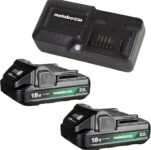
Metabo HPT 18V 2.0Ah Battery & Charger Kit
It supplies a professional-grade charging kit with two slide-type batteries and a compatible charger, making it a practical choice for tradespeople and serious DIYers. The protection circuitry and lightweight cell design favor jobsite reliability, though the 2.0Ah capacity can be limiting for sustained heavy cutting.
Overview
This kit combines two 18V 2.0Ah slide-style batteries with a UC18YKSL charger, targeting professionals and committed DIYers who need a ready-to-go backup system. The emphasis is on durable construction, safety electronics, and portability.
Key features and jobsite benefits
On the jobsite, the two-pack configuration is often the difference between finishing a project and waiting for a recharge. Users who rely on impact drivers and drills will appreciate the steady performance and the included charger’s cross-compatibility with other slide-type batteries.
Limitations and buyer guidance
Practical tip: for cutting-intensive jobs, keep an additional 2.0Ah pack on hand or consider a higher-Ah slide pack if available. The kit still represents a strong, portable starting point for people building a reliable 18V toolkit.
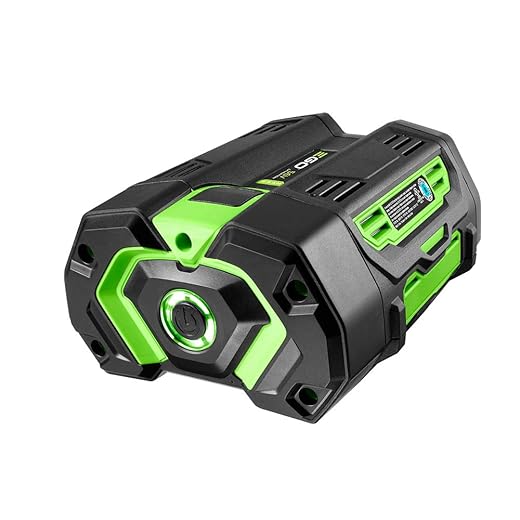
EGO 56V 5.0Ah ARC Lithium Battery
It delivers strong, sustained power with a fast-charge option and an improved fuel gauge for run-time confidence. The advanced cell cooling and robust build make it well suited for heavier residential tasks, though it is heavier and pricier than smaller-format alternatives.
Overview
The 56V 5.0Ah ARC Lithium battery is designed to be a high-capacity power source for a broad 56V outdoor-equipment platform. It targets users who need more runtime and frequent fast recharges between medium-to-large yard tasks. The pack's sellable features are its Keep-Cool cell technology, integrated fuel gauge, and compatibility across the 56V tool line.
Key features and practical benefits
These translate into fewer battery swaps during a mowing or blowing session and more predictable run time when working on multi-tool chores. For example, a homeowner alternating between a blower and mower can rely on predictable remaining runtime and faster top-ups during breaks.
Limitations and real-world insights
Practical tip: buy a second 5.0Ah or a pair of smaller packs to stagger weight and runtime depending on the job. In short, the battery suits those who prioritize consistent power and fast recharge over minimal weight and lowest cost.
WORX 20V 4.0Ah Power Share PRO Battery
It provides extended runtime and improved cell protection for the WORX Power Share ecosystem, striking a balance between runtime and weight. The intelligent BMS and physical protections are useful for multi-tool homeowners, though peak-output runtime on highest settings can be short.
Overview
WORX's Power Share PRO 4.0Ah battery is built to be a mid-to-high capacity pack for users invested in the WORX 20V/40V/80V ecosystem. It focuses on runtime gains, thermal control, and shock protection to keep tools working across gardening and DIY tasks.
Design and practical advantages
These design choices reduce the likelihood of premature failure on job sites or in rough garden conditions and give confident performance when switching between a blower, mower, or saw. Several users report confident performance across yard-care chores when pairing two batteries for longer sessions.
Limitations and recommendations
Practical tip: for extended projects run with two 4.0Ah packs alternating in the charger to maintain steady work without long mid-job waits.
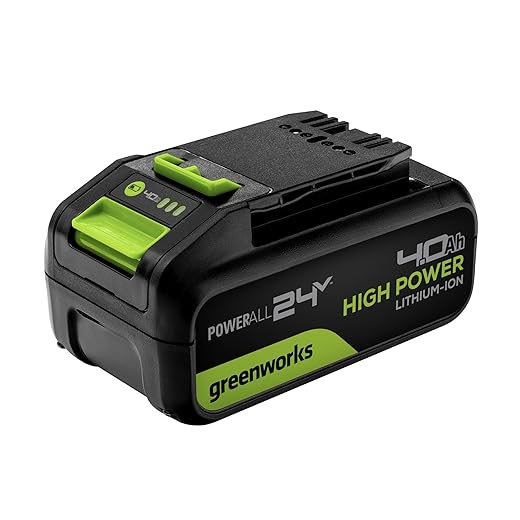
Greenworks 24V 4.0Ah High-Power Battery
It offers a measurable boost in run-time and compatibility across a large 24V tool ecosystem, delivering good value at its price point. The integrated protections and LED fuel indicator make it a practical choice for multi-tool households, though very heavy-duty tasks may require multiple packs.
Overview
This 24V 4.0Ah pack is positioned as an upgraded entry to Greenworks' 24V platform, aimed at homeowners and light pros who want more run-time without stepping up to larger voltage families. It emphasizes platform interoperability and practical extras like charge indicators and a three-year warranty to protect the investment.
Key features and benefits
The combination of increased power and broad tool compatibility makes it easy to share batteries between a mower, blower, trimmer, or even handheld tools. A user running two packs in a mower reported about 45 minutes under normal conditions, demonstrating the practical benefit for quarter-acre properties.
Limitations and buyer guidance
Practical tip: pair one 4.0Ah battery with a spare 2.0–4.0Ah unit to balance weight and runtime. For most homeowners the pack represents a strong performance-per-dollar tradeoff.
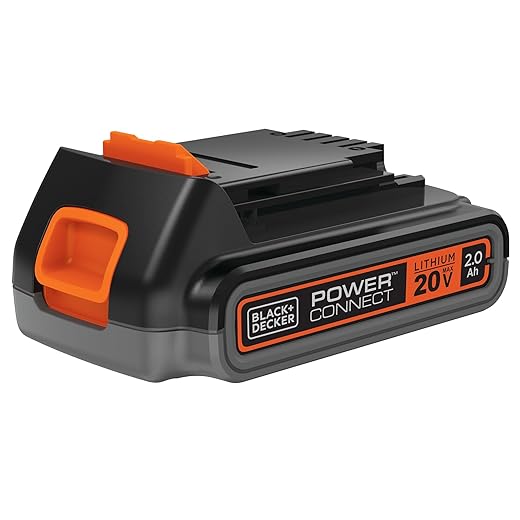
BLACK+DECKER 20V MAX 2.0Ah Battery Pack
It serves as an economical, reliable spare for the 20V MAX tool range and works well for quick home tasks and intermittent use. Runtime is modest, so it is best treated as an extra rather than the primary power source for demanding jobs.
Overview
The 20V MAX 2.0Ah battery targets homeowners and casual DIYers who need a compact, affordable power source for a range of 20V tools. It’s positioned as a practical backup or supplemental pack rather than a heavy-duty runtime solution.
Features and everyday usage
In practice this battery is useful for short tasks like trimming, quick drill jobs, or swapping into a cordless vacuum between cleanings. One homeowner noted improved convenience when having a second battery for a multistory cleaning routine.
Limitations and user guidance
Practical tip: treat it as a backup to keep a tool on-hand while the primary pack charges. For heavier use, upgrade to a 3.0Ah or larger pack where available.
Final Thoughts
Best for heavy residential work and long runtimes: EGO 56V 5.0Ah ARC Lithium Battery — It is the top pick when sustained power matters. They will benefit landscapers and homeowners who run battery-hungry attachments (blowers, mowers, hedge trimmers) for extended periods. Strengths: high capacity (5.0Ah), fast-charge option, advanced cell cooling, clear fuel gauge. Limitation: heavier and pricier, so its value shines when long, uninterrupted runtime is required.
Best jobsite kit and professional convenience: Metabo HPT 18V 2.0Ah Battery & Charger Kit — It is the go-to for tradespeople who need a ready-to-use kit with two slide batteries and a charger. Strengths: pro-grade protections, lightweight cell design, immediate redundancy (two batteries), and broad 18V compatibility on jobsite tools. Limitation: 2.0Ah capacity limits long high-output tasks. Recommend pairing with higher-Ah 18V packs in heavy-use scenarios.
Practical runner-ups: WORX 20V 4.0Ah is a solid multi-tool balance for Power Share users. Greenworks 24V 4.0Ah is a compact, value-focused option across a large tool ecosystem. BLACK+DECKER 20V MAX 2.0Ah serves best as an economical spare battery for light DIY work.
Buying and Using Outdoor Tool Batteries: A Practical Guide
Choosing a battery is not just about Ah or a flashy voltage number. They should weigh four practical factors: compatibility, runtime (Ah × voltage), recharge time, and weight. Compatibility determines tool selection and long-term cost. Runtime influences how often they must swap packs. Recharge time affects fleet turnover. Weight affects fatigue during handheld use.
Tool-match recommendations:
Battery management best practices:
Safety and longevity:
Cost-per-runtime and buying strategy:
Quick comparison (at-a-glance):
| Model | Voltage | Typical Ah | Best for |
|---|---|---|---|
| EGO ARC 5.0Ah | 56V | 5.0Ah | Long runtime, heavy residential/landscape tasks |
| Metabo HPT Kit | 18V | 2.0Ah (x2) | Jobsite redundancy, tradespeople needing a ready kit |
| WORX Power Share | 20V | 4.0Ah | Balanced multi-tool runtime for homeowners |
| Greenworks 24V | 24V | 4.0Ah | Compact, value across a 24V ecosystem |
| BLACK+DECKER 20V | 20V | 2.0Ah | Economical spare for light DIY tasks |
They should prioritize platform strategy first (which tools they already own), then match a pack that meets daily runtime needs and charging cadence. A small investment in the right battery ecosystem prevents repeated downtime and lowers total operating cost over seasons.
FAQ
Higher voltage often indicates the capacity to drive more demanding motors and deliver higher peak power; however, voltage must be paired with capacity (Ah) and the tool's design. They should match the tool platform—56V systems like EGO excel at heavy loads and long runtimes, while 18–24V platforms are lighter and better for frequent portability.
For continuous landscaping shifts, they should plan for at least two full-capacity packs per primary tool (one in-use, one charging). For multi-tool households, one high-capacity pack plus one spare works; for contractors, two or three packs per crew member reduce downtime.
Fast charging increases cell temperature and cycles stress if used constantly. They should rely on fast-charge only when necessary; modern packs (like EGO ARC) include cooling and BMS to mitigate wear. For long-term health, occasional slow overnight charges are gentler.
No. Battery platforms are proprietary. They must use the brand-matching packs and chargers designed for the tool ecosystem. Adapter solutions exist but often sacrifice safety, warranty, or performance.
They should store batteries at about 30–50% charge in a cool, dry place above freezing. Cold reduces immediate runtime; allow packs to warm to room temperature before heavy use. Avoid long-term storage at full charge to minimize capacity fade.



Black+Decker 20V 2.0Ah: the ultimate “I forgot to charge the good battery” backup. 😂
I got one purely because I didn’t want to be THAT neighbor who borrows tools and returns them with dead batteries. It works fine for small jobs — drills, quick trim—but don’t expect miracles.
Pros: cheap, lightweight, compatible
Cons: short runtime, not for sustained use
Anyone else use these as their “emergency” pack? Also, does anyone else feel a tiny bit smug when their neighbor’s battery dies? (guilty)
Pro tip: rotate spares every few months so they don’t sit discharged for too long.
I buy them on sale as backups. They’re so cheap it’s almost criminal not to have one.
Haha, been there. I keep one in the glovebox for last-minute fixes.
You’re not alone. Many homeowners keep a lightweight spare for exactly that reason. It’s a good habit to have for intermittent use.
Smugness level: mild. But I’ll trade that for not having to borrow a cable drill at midnight.
I like both Greenworks and EGO depending on the job. Greenworks 24V is lightweight and great for my small yard; EGO 56V gives you the oomph when I need to tackle heavier stuff.
My elderly neighbor borrows my 24V packs sometimes because they’re lighter — big plus for accessibility. But the EGO packs are hands-down better for long stretches.
Anyone have tips for carrying heavier packs around the yard without wrist/back strain?
Also try alternating hands/tools to distribute strain. Sounds simple but helps.
Use a small sling or tool bag to shift weight from your wrist to your shoulder, and consider longer-handled tools that reduce the need to bend over. For repeated heavy use, a wheeled cart or bench for tool staging reduces carrying.
I clip them in a small hip pouch — feels odd at first but saves my back.
If it’s really heavy, I mount the battery on the tool where possible instead of carrying it separately. Less awkward that way.
How fast does the EGO 5.0Ah actually charge with the fast-charge option? I saw the review notes fast-charging but the real-world difference matters when I want to swap quickly between tasks.
I got the fast charger kit and it shaved an hour off the charge time. Worth it if you hate waiting.
With the right fast charger, EGO’s 5.0Ah can reach usable charge levels significantly quicker — often top-ups in 30–60 minutes versus several hours on standard chargers. Exact times vary by charger model and battery state.
I’ve used the Metabo HPT 18V kit on a few jobsite days and the build feels solid. The 2.0Ah batteries are light and the charge indicators are handy, but I definitely felt the limits on extended cutting tasks. Good for pros who need a slim second kit, not for an all-day demo.
Would like to know if anyone swaps in higher-capacity Metabo cells or just runs multiples?
Thanks for sharing your experience, Maya — that matches our verdict. A common approach is to keep extra 2.0Ah packs on-hand for quick swaps or invest in the larger-capacity versions if your tool platform supports them.
I do the extra-pack approach. On tight sites it’s easier than waiting for a recharge. Also pre-charge them in the truck overnight.
Quick tip: label the packs with runtime notes. It saves the “which one was used more?” guessing game.
EGO 56V sounds like a beast — I love the idea of fast-charging and an improved fuel gauge. But how heavy are those packs in practice? I have back issues and the weight could be a deal-breaker.
EGO’s 5.0Ah is definitely heavier than a 20V pack. It’s built for higher power delivery, so expect more mass. For users with back issues, consider using EGO only on heavier tools where the power-to-weight tradeoff is worth it, or use a wheeled cart for yard equipment.
I have the BA2800T — it’s a handful for handheld leaf blowers but fine for riding mowers and hedge trimmers where you don’t carry it on your person as much.
WORX Power Share 20V 4.0Ah here — it’s been my go-to for weekend yard work. Lightweight enough for pruning and the BMS seems to stop weird shutdowns.
Pros:
– Balanced runtime for most home tools
– Packs fit multiple tools (love that)
Cons:
– On high power settings the runtime drops fast
– Would be nicer with a charge indicator on the battery itself 🤷
Anyone else notice the same behavior?
Totally — low-ish setting + slower technique = longer battery life. Kinda zen gardening 😂
You can also throttle back a hair and save surprising runtime while still getting the job done.
I noticed voltage sag on heavy pruning runs. Two packs and alternating works well for me.
Yes, that’s expected — higher power settings draw more current, so runtime falls off. The intelligent BMS protects the pack but can’t change raw energy limits. Keeping a spare pack in rotation helps for longer sessions.
Quick compare question for folks who’ve used both Metabo HPT and WORX: which felt more durable after a season of yard/garage use? I lean toward Metabo for jobsite toughness but some reviews praise WORX build for homeowners.
Metabo HPT is built with tradespeople in mind, so the ruggedness is a notch above WORX, which prioritizes homeowner ergonomics. For heavy daily use choose Metabo; for lighter, multi-tool household use, WORX is a fine choice.
Both are fine if treated reasonably. If you’re rough with gear, Metabo is the safer bet.
Metabo lived through a rainy weekend on my deck — no issues. WORX is fine but don’t drop it off a ladder and expect the same luck 😅
Greenworks 24V 4.0Ah seems like a sweet spot for multi-tool households. I like that it’s compatible with many tools. My question: for a homeowner doing medium-duty lawn and shrub work, is one pack usually enough or should I plan for two?
For medium residential tasks, one 4.0Ah pack can handle most quick mowing/pruning sessions, but if you’re doing the whole yard including mulching and trimming, two give you comfortable coverage without recharging mid-job.
I keep two. If you wait to find you need one mid-job, you’ll waste time recharging. Also swapping fresh-pack to finish the job feels great 😅
Wish more brands would standardize battery platforms. Having five different chargers in the shed is a mess. I get why pros have brand ecosystems, but for homeowners it’s chaos. Anyone consolidated to one platform and stuck with it?
I went all-in on one brand two years ago — no regrets. My shed looks cleaner and I buy batteries only when needed.
Platform consolidation is a big reason many people pick a brand early. If your tools match a single battery ecosystem you’ll save money and clutter. The roundup tries to highlight packs that fit multi-tool ecosystems for that reason.
Pro tip: buy adapters only if you must — they can be hit-or-miss and sometimes void warranties.